

Why Realism Will Never Be Extinct in Art
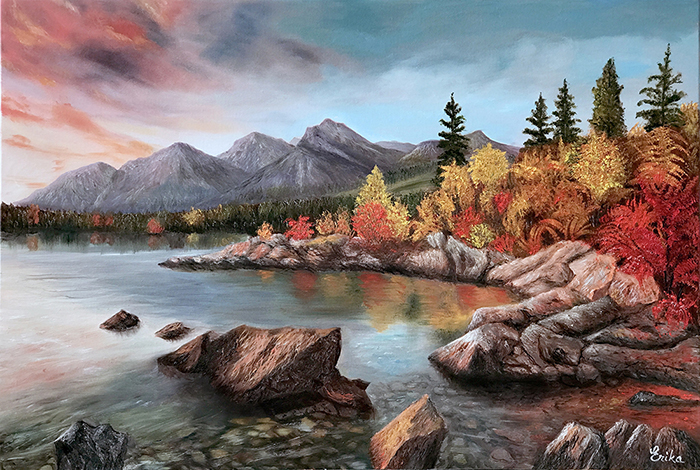
In every era of art history, someone has declared realism “finished.” When photography emerged in the 19th century, critics questioned why painting should continue to represent the visible world. When abstraction rose to prominence in the 20th century, realism was dismissed as outdated. And yet, realism persists — evolving, adapting, and continuing to captivate audiences across generations.
Far from being obsolete, contemporary realism is one of the most enduring and emotionally resonant movements in today’s art world.
What Is Contemporary Realism?
Unlike classical realism, contemporary realism is informed by photography, digital culture, cinematic lighting, and modern psychology. It is not merely about copying reality — it is about interpreting it. The contemporary realist artist chooses what to reveal, what to conceal, and how to heighten the emotional atmosphere of a scene.
It is realism with intention.
 The Human Need to Recognize
One reason realism will never disappear is simple: humans are wired to recognize.
We are drawn to faces, to gestures, to light falling across familiar forms. When viewers encounter a realistic painting, there is an immediate point of entry. Recognition creates connection. From there, emotion can unfold.
Abstract art engages the intellect and the senses in powerful ways. But realism engages empathy almost instantly. It reminds us of ourselves.
Realism as Resistance
In a world saturated with filters, artificial intelligence, and curated digital identities, realism has taken on new meaning.
Painting something by hand — patiently, meticulously — becomes an act of resistance. It slows time. It demands presence. It honors observation. Contemporary realism reminds us that looking closely is a radical act.
While trends cycle rapidly through galleries and social media feeds, realism offers something steady. It asserts that the human figure, the landscape, the still life — these subjects are not exhausted. They are inexhaustible because human experience itself is inexhaustible.
Technique and Mastery Still Matter
There is also something undeniably powerful about technical mastery.
From the anatomical precision pioneered during the Renaissance by artists such as Leonardo da Vinci, to the dramatic light of Caravaggio, to the hyperreal figures of Omar Ortiz, realism has always pushed artists toward discipline and rigor.
Skill alone does not make great art — but skill in service of vision creates impact.
Contemporary realism carries this tradition forward while integrating modern subject matter, contemporary narratives, and personal symbolism. It respects craft without being trapped by tradition.
Realism Evolves — It Doesn’t Disappear
Every major art movement has been declared the future at some point. Impressionism, abstraction, minimalism, and conceptual art — each reshaped the visual language of its time.
Yet realism never vanished. It adapted. Even artists often associated with abstraction maintained deep ties to representation. The dialogue between realism and abstraction is not a battle; it is a continuum.
As long as there are human stories to tell, light to study, and moments to preserve, realism will endure.
Why Realism Will Never Be Extinct
Realism survives because:
- It connects instantly.
- It showcases mastery.
- It translates emotion through the familiar.
- It evolves alongside culture.
- It answers a timeless human need to see ourselves reflected.
Art does not move in straight lines. It expands outward. And realism remains one of its strongest foundations.
Trends will shift. Media will change. Technology will accelerate. But the desire to capture the human experience with clarity, sensitivity, and truth — that will never disappear.
And as long as that desire exists, realism will never be extinct. That is why, as an artist, I will never truly abandon it.